Academic AI
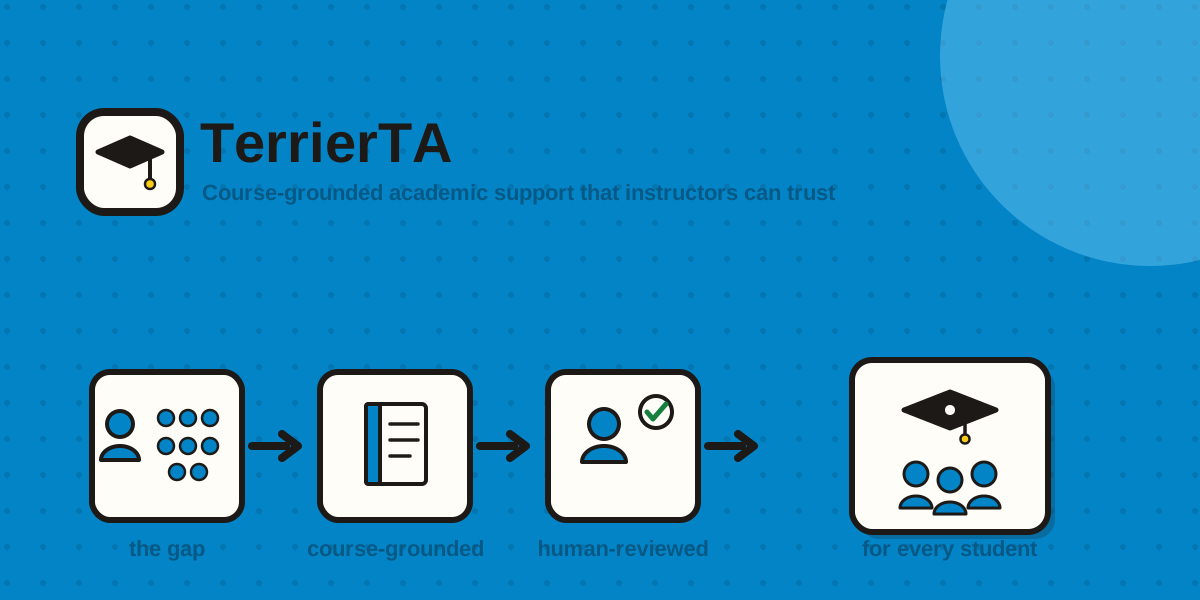
Course-grounded AI teaching assistants answer questions well, but they tend to do only that, are built for a single institution, and keep automated grading as a separate, disconnected tool. This research asks whether assessment, tutoring, and content generation can instead run as cooperating agents over one shared per-course knowledge base, so the component that answers a student's question is grounded in the same material used to evaluate their work — and how to make automated assessment trustworthy enough that instructors will rely on it.
Course-grounded assistants are more reliable than general chatbots, but they tend to be single-purpose, tied to one institution, and disconnected from the grading tools that draw on the same course material. This thread investigates whether tutoring, assessment, and content generation can run as one course-grounded system, and how to make automated assessment trustworthy enough that instructors will depend on it: consistent across students, transparent in its reasoning, able to route uncertain cases to a human, and auditable. Trust is treated as a property of the design rather than a disclaimer. The work draws on agentic LLM architectures, retrieval-grounded generation, and rigorous evaluation, with a deployed teaching-assistant system as its testbed. Faculty-advised.