Cultural Heritage AI
Provenance research for Nazi-era cultural objects means cross-referencing dealer archives, red-flag name lists, and art-historical context to judge whether a work may have been looted or sold under duress, and the expertise to do it is scarce against the scale of objects at issue. This research investigates how a source-grounded AI system can support that due diligence, citing every claim, abstaining when the evidence is not there, and leaving the final determination to a human, framed as decision support rather than an automated verdict.
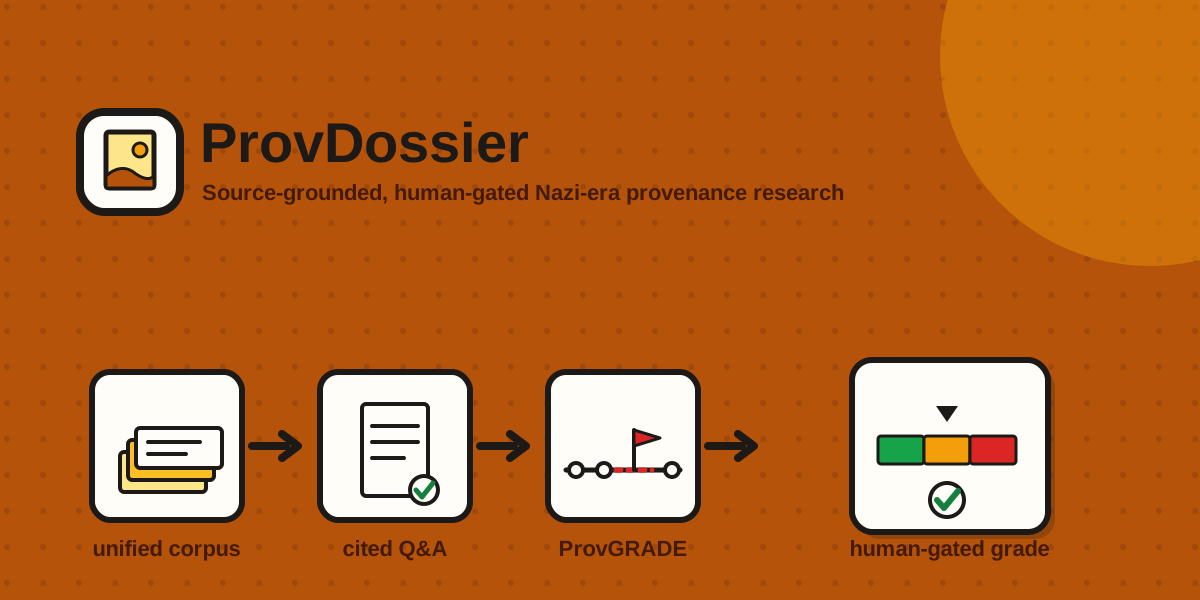
Establishing whether a cultural object may have been looted or sold under duress during the Nazi era is painstaking, expert-bound work that does not scale to the number of objects at issue. This thread investigates how a source-grounded agentic system can support that due diligence in two ways over one shared corpus: answering provenance questions with a citation for every claim and an explicit abstention when the evidence is not there, and producing a calibrated, fully cited risk assessment through a mandatory human-review gate. Trust is treated as a property of the design: determinations follow fixed, auditable rules rather than free-form model judgment, and a human always makes the final call. It is framed throughout as decision support, not an automated verdict. The work draws on agentic LLM architectures, retrieval-grounded generation with citation provenance, and rigorous evaluation. Faculty-advised.